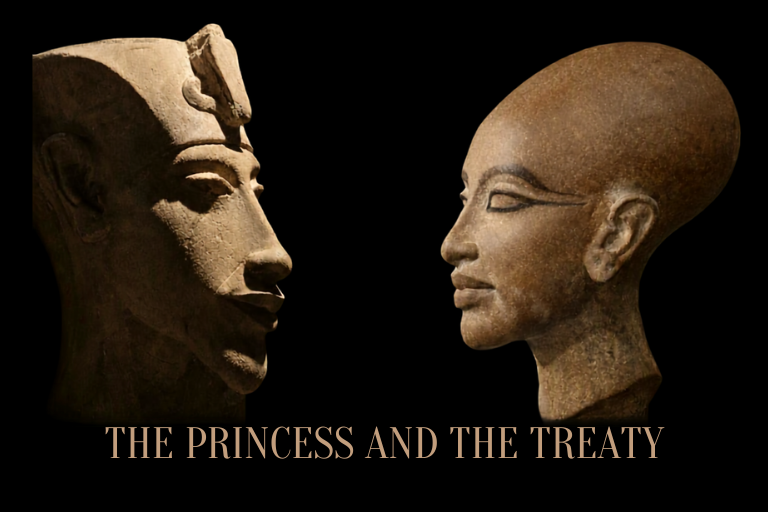
The Princess & The Treaty of Kadesh
In the late 14th century BCE, a young Egyptian queen made a desperate and unprecedented request. Her name was Ankhesenamun, daughter of Akhenaten and Nefertiti, and widow of Tutankhamun. Her plea—sent to the king of the Hittite Empire—set off a chain of events that shattered diplomatic trust, triggered retaliation, and ultimately contributed to the geopolitical tensions that culminated in the Battle of Kadesh.
Centuries later, the treaty that ended those hostilities—the Treaty of Kadesh—stands in the United Nations Headquarters as a symbol of humanity’s earliest recorded attempt at international peace.
This is the story of how it began.
Who Was Ankhesenamun?
Before her desperate letter, Ankhesenamun had lived most of her short life as a young princess of Amarna.
She was thrust into queenship as a child, made a sister‑wife, and eventually, widowed as a teenager after two stillborn daughters left Egypt without an heir. Meanwhile, she was forced to navigate the political reversal of her father’s Aten revolution collapsing back into the old Amun order.
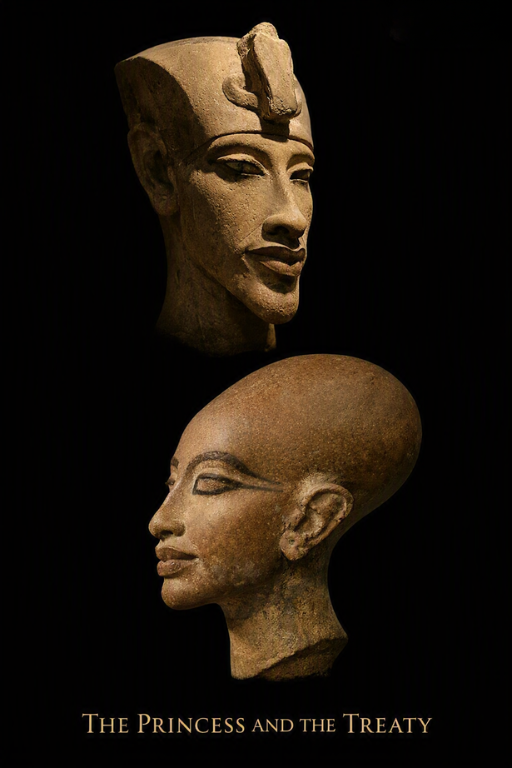
Akhenaten with one of his six daughters — likely Meritaten.
This quartzite head was excavated in 1912 from the workshop of the sculptor Thutmose at Tell el‑Amarna and is now held in the Egyptian Museum, Cairo.
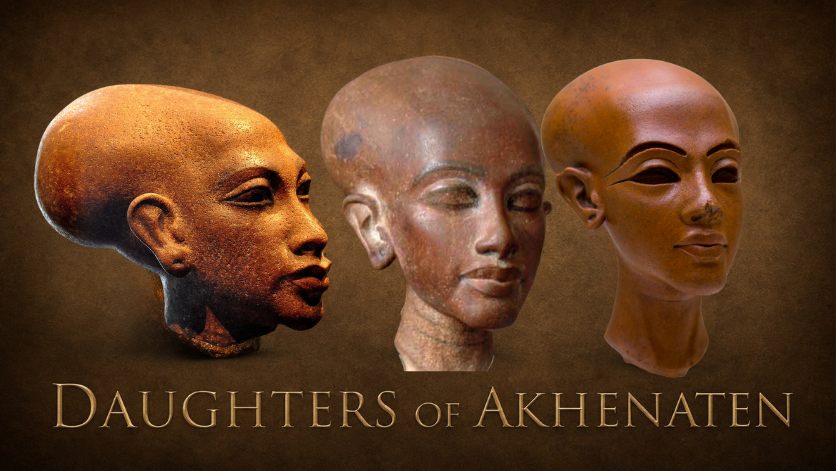
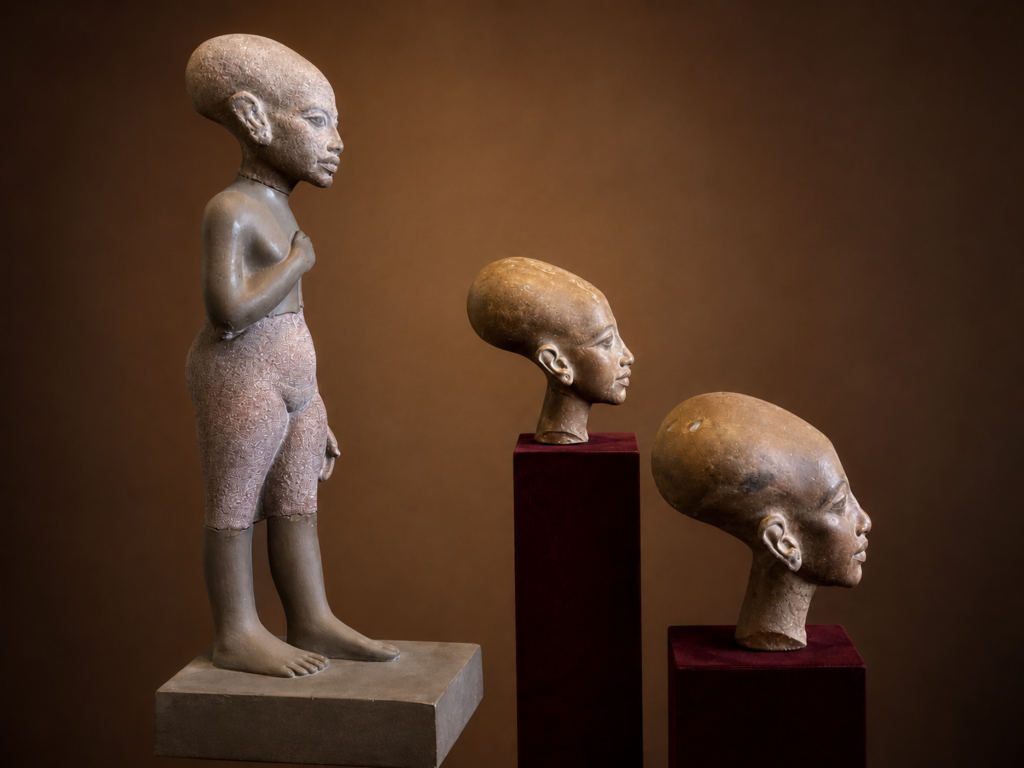
Akhenaten and Nefertiti had six daughters, and Ankhesenamun was the third of six:
- Meritaten
- Meketaten
- Ankhesenpaaten (Ankhesenamun)
- Neferneferuaten Tasherit
- Neferneferure
- Setepenre
Tutankhamun was Ankhesenamun’s half‑brother or stepbrother, and their marriage followed the royal tradition of consolidating power within the Amarna bloodline.
She was raised during the Amarna religious revolution — the same revolution explored in The Architecture of Consciousness: The Priestess & The Pharaoh — and her life reflects the political and spiritual shockwaves that followed the collapse of that era.
A Queens Plea
From a Queen’s Plea to the World’s First Peace Treaty: How Ankhesenamun’s Letter Sparked Decades of Conflict
The Queen’s Letter: An Unprecedented Request
When Tutankhamun died without an heir, Queen Ankhesenamun found herself isolated and politically vulnerable. Powerful factions within Egypt—especially Ay, the High Priest of Amun and Horemheb, the military general—were maneuvering for the throne. To escape being forced into marriage with one of them, she took a step no Egyptian royal woman had ever taken.
She wrote to the Hittite king Suppiluliuma I, asking him to send one of his sons to marry her and become king of Egypt.
We do not have her original letter. But we do have the Hittite royal annals that quote her words.
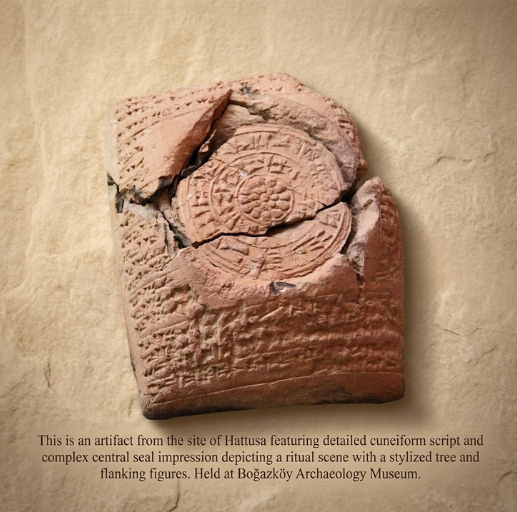
Primary Source Quote (Hittite Royal Annals)
“My husband has died and I have no son. They say you have many sons. If you send me one, he will become my husband and king of Egypt.”
— Annals of Mursili II, Hittite royal archives, Hattusa
This request shocked the Hittite court. Suppiluliuma hesitated, even sent an envoy to Egypt to confirm the queen’s plea, then agreed. He sent his son Prince Zananza south toward Egypt.
Zananza never arrived.
He was murdered at the border—almost certainly by Egyptian factions who refused to allow a foreign prince to take the throne.
Suppiluliuma’s Reaction
╔════════════════════════════╗
“They killed my son. They acted treacherously.”
— Suppiluliuma, Hittite Royal Annals
╚════════════════════════════╝
The diplomatic relationship collapsed instantly.
The Breach of Trust and the Road to War
Zananza’s murder was more than a political assassination — it shattered any possibility of peace between Egypt and the Hittite Empire.
Suppiluliuma launched retaliatory raids into Egyptian‑controlled territories in Syria. These raids captured prisoners who brought plague into the Hittite empire—killing Suppiluliuma and his heir Arnuwanda II.
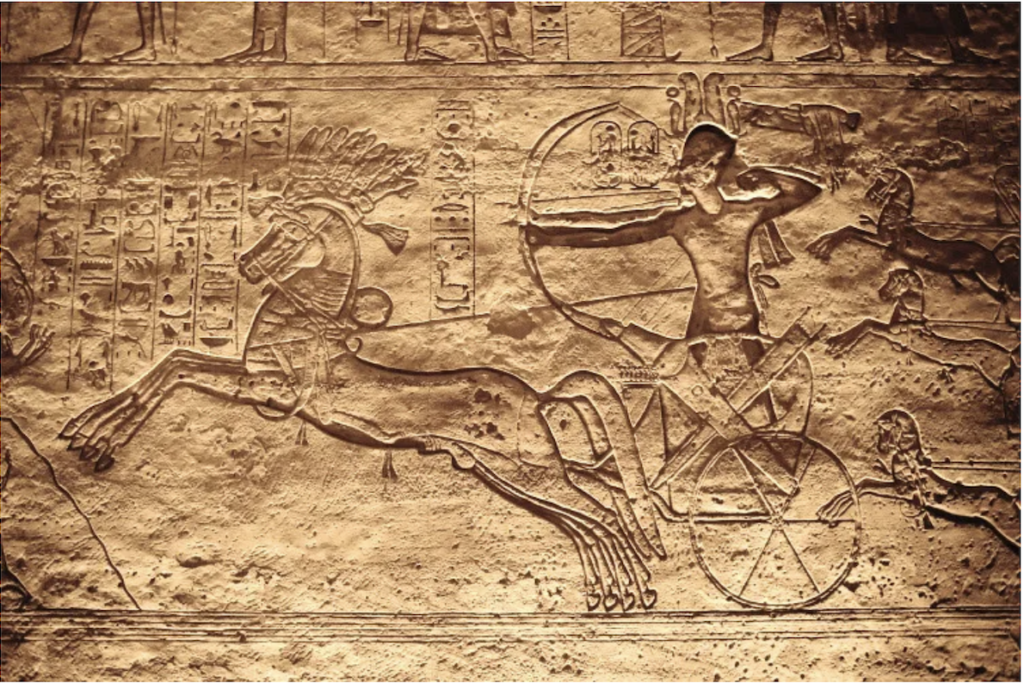
The next Hittite king, Muwatalli II, rebuilt the army and pushed south. Egypt, under Seti I and later Ramses II, pushed north. Both powers wanted control of the same territories: Amurru and Kadesh.
The result was decades of tension that culminated in the Battle of Kadesh (1274 BCE)—the largest chariot battle in history.
The Treaty of Kadesh: The World’s First Peace Treaty
After years of conflict, Egypt and the Hittite Empire finally forged peace under Ramses II of Egypt and Hattusili III of Hatti. Their accord—the Treaty of Kadesh (1259 BCE)—is the earliest surviving international peace treaty.
Two official versions of the Treaty of Kadesh
- Hittite Version: clay tablet inscribed in Akkadian cuneiform discovered at Boğazköy/Hattusa.
- Egyptian Version: a hieroglyphic inscription carved at the Ramesseum
A modern replica of the Hittite tablet, gifted by Türkiye, is displayed at the United Nations Headquarters in New York. It stands as a testament to humanity’s oldest recorded peace agreement — a reminder that long before modern diplomacy, international law, or global governance, two great powers chose negotiation over endless war.
A Bridge Across Millennia
The treaty forms a historical bridge between:
- Ankhesenamun’s desperate appeal for stability,
- the decades of mistrust and retaliation that followed,
- the silver tablets of the treaty of Kadesh were exchanged between rival kings,
- the clay archives preserved in the Hittite capital,
- and contemporary efforts to maintain peace among nations.
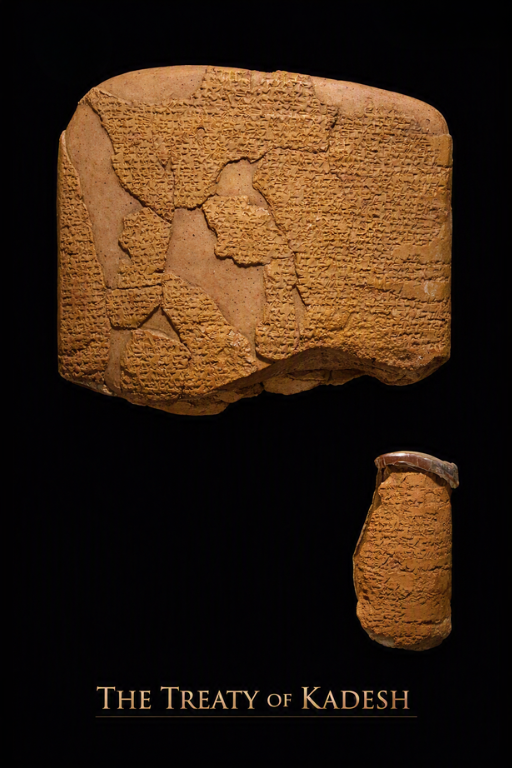
Treaty of Kadesh – A Full‑Circle Moment
A 3,200‑year‑old diplomatic accord now sits at the heart of an institution dedicated to preventing war — a striking full‑circle moment in the long history of human diplomacy.
The Treaty of Kadesh was not born from idealism — it emerged because two powerful empires met in battle and neither could defeat the other.
Stalemate forced diplomacy.
A Reflection for International Peace Day
On International Peace Day — often called World Peace Day — this ancient accord reminds us that even in eras defined by rivalry, ambition, and conflict, peace can arise when nations recognize that cooperation serves them better than continued war.
Continuing the Teaching
Akhenaten’s one unsustainable idea didn’t end with his passing. His son Tutankhamun couldn’t — or wouldn’t — sustain the Aten religion. Their names shifted back to honor Amun, and Tut’s short life left his sister‑wife Ankhesenamun to face the political fallout.
At 09:12 — Akhenaten’s paradigm shift and why it destabilized an entire kingdom.
If you’d like to explore the deeper context behind Akhenaten’s revolution — and how it shaped the world Ankhesenamun inherited — you can watch my recent conversation on Beyond the Ordinary. It’s a gentle doorway into the teachings that continue through this post, our travels, and the upcoming course replay.
You can also take my course, Architecture of Consciousness: The Priestess & The Pharaoh — explore my offering here.
Or my follow up blog post, After the Course: What Lysimache’s ‘No’ Meant — click here.
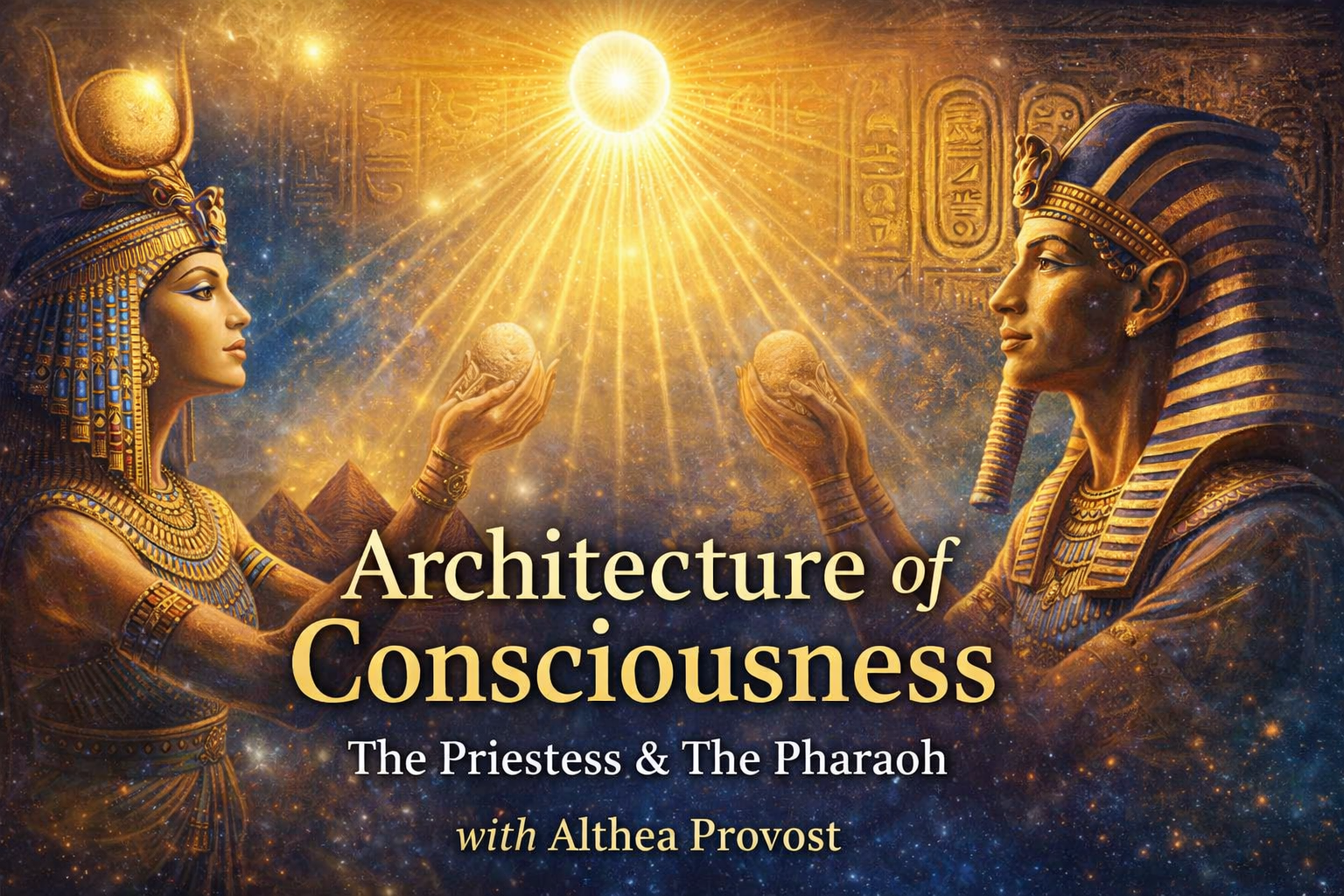
In this episode, you’ll discover:
In this episode, you’ll discover:
- How ancient temples mirrored cosmic realms
- Why ritual maintained energetic coherence
- What Akhenaten’s rise and fall reveal about power
- How priestess lineages were supported — and why their loss matters
- Why every action creates consequences within the larger system
- How sacred architecture amplifies consciousness
You can watch the full interview here anytime — it’s a beautiful foundation for the story that follows.
Treaty of Kadesh Sources
Primary Sources
- Annals of Mursili II, Hittite royal archives, Hattusa
- Treaty of Kadesh, Hittite version (Akkadian cuneiform)
Academic Translations
- Beckman, Gary. Hittite Diplomatic Texts. Society of Biblical Literature, 1999.
- ETANA Core Texts (PDF of Hittite historical texts)
Museums